
Namibia and Victoria Falls: How to Plan a Journey of Deserts, Wildlife and Waterfalls
Some African journeys are defined by wildlife; others by landscapes. Combining Namibia and Victoria Falls gives you both, with a sense of scale that is difficult to match. Namibia’s open roads lead through ancient dunes, sculpted canyons and wildlife-rich Etosha. Victoria Falls brings a completely different energy: tropical vegetation, the Zambezi River and the roar of water dropping into a narrow gorge.
This is not a quick point-to-point holiday. It is a journey for travellers who enjoy watching the scenery change, staying in characterful lodges and allowing time for each destination to reveal itself. With thoughtful planning, the desert and the waterfall feel like natural chapters in one Southern African story.
An elephant beneath an acacia tree in Namibia
Why combine Namibia and Victoria Falls?
The appeal lies in contrast. Namibia is spacious, dry and cinematic. Roads stretch towards distant mountains, dunes glow red in the early light and animals gather around Etosha’s waterholes. Victoria Falls is greener and more dramatic, with mist rising above the gorge and adventure activities centred on the Zambezi.
The combination also creates variety without losing a clear theme. Both destinations reward travellers who value nature, photography and a strong sense of place. Namibia provides the slow build of a road journey; Victoria Falls gives the itinerary a memorable finale.
Begin among Namibia’s desert landscapes
Many itineraries begin in Windhoek before turning south or west towards the Namib. Sossusvlei and the surrounding Namib-Naukluft landscapes are among the country’s defining sights. The experience is at its best when you stay close enough to reach the dunes early, before the strongest heat and while the colours are changing.
The pale clay pan at Deadvlei, dark camel-thorn trees and shifting shadows create extraordinary photography. Scenic drives and guided nature activities also reveal how life survives in a seemingly empty environment.
Red dunes and mountain scenery in Namibia
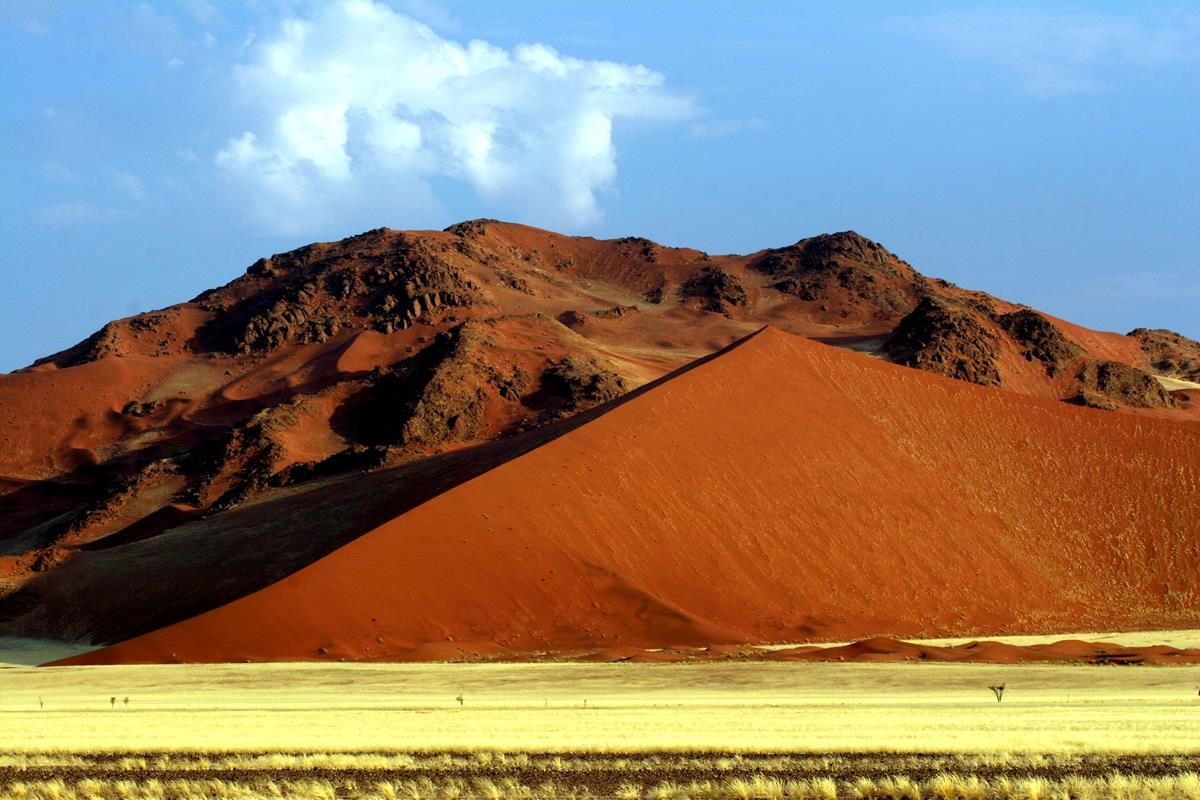
Red dunes and mountain scenery in Namibia
Namibia’s distances are significant, so route design matters. A map may make two lodges look reasonably close, but gravel roads, photography stops and changing conditions can turn a transfer into a full day. A good itinerary limits unnecessary backtracking and gives you at least two nights in important regions.
Add the depth of the south
Travellers with sufficient time can include the Kalahari, Lüderitz, the ghost town of Kolmanskop or Fish River Canyon. The south feels remote even by Namibian standards, with striking geology and far-reaching views. Fish River Canyon is one of Africa’s great natural landscapes, especially when low light catches the rock walls.
Including the south makes most sense in a longer itinerary. Trying to add it to a short trip can create too many driving days. If your holiday is limited to around two weeks, it may be better to focus on Sossusvlei, the coast, Damaraland and Etosha before flying onward.
The open road through Namibia’s mountain landscapes
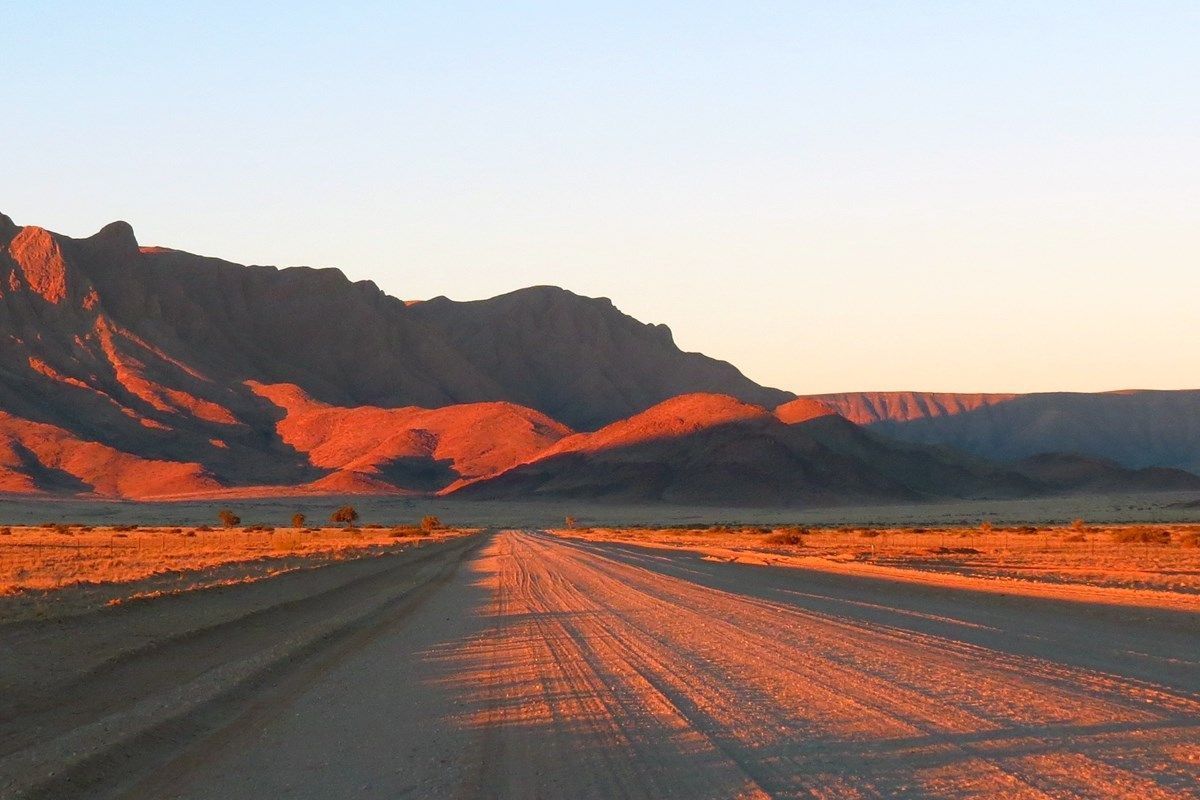
The open road through Namibia’s mountain landscapes
Travel north through the coast and Damaraland
Swakopmund provides a change of pace between the desert and the northern wilderness. The Atlantic coast brings cool air, restaurants and optional activities, from scenic flights to desert excursions. It is also a practical place to pause before continuing inland.
Damaraland is less about ticking off a checklist and more about immersion. Broad valleys, rocky outcrops and desert-adapted wildlife create a powerful atmosphere. Depending on the area and season, guided excursions may search for elephants that move through these arid landscapes. Twyfelfontein’s rock engravings add a cultural and historical dimension.
Make time for Etosha’s waterholes
Etosha National Park adds the classic wildlife chapter. Its vast salt pan and network of waterholes attract elephants, antelope, giraffes, predators and abundant birdlife. During dry periods, waiting at a waterhole can be as rewarding as driving continuously: one species arrives, another gives way and the scene changes by the minute.
Two or three different areas around Etosha can provide contrasting experiences, but avoid changing lodge every night. Staying long enough allows for early starts, afternoon drives and time simply watching from a lodge waterhole where available.
Fish River Canyon illuminated by warm light
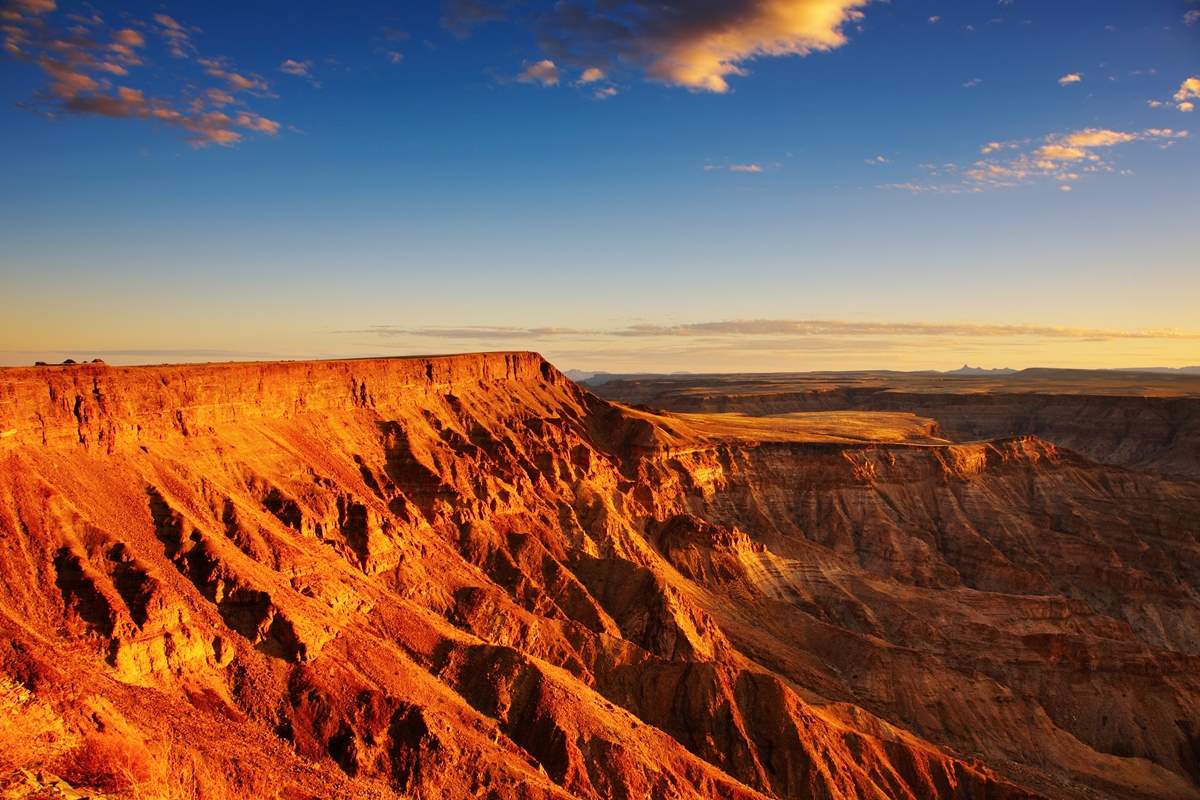
Fish River Canyon illuminated by warm light
Guided and self-drive safaris each have advantages. Self-driving offers independence and a satisfying sense of exploration. A knowledgeable guide adds tracking skill, context and freedom from navigating. Some travellers combine both, driving between regions and joining guided activities at selected lodges.
How do you connect Namibia with Victoria Falls?
For most visitors, flying is the practical answer. The exact routing depends on current schedules, travel dates and whether the journey finishes in Windhoek, Etosha or the Zambezi Region. A specialist can compare connections through regional hubs and build in enough time for baggage requirements and border procedures.
A longer overland itinerary can continue through Namibia’s Zambezi Region towards Chobe and Victoria Falls. This creates an exceptional progression from desert to riverine habitat, but it needs more days. The distances should be treated as part of the experience rather than rushed.
Finish at the Smoke That Thunders

Victoria Falls and its rising mist
Victoria Falls is known locally as Mosi-oa-Tunya, the Smoke That Thunders. Water volume changes through the year, transforming both the appearance of the Falls and the activities available. At higher flow the spray can be immense; in lower-water periods the geology of the gorge becomes more visible. Neither experience is inherently better—your priorities should guide your dates.
Allow at least two or three nights. Walk the rainforest paths, take a sunset cruise on the Zambezi or view the Falls from the opposite side if time and border requirements allow. Scenic flights offer a remarkable perspective, while more adventurous activities should be booked with reputable operators and assessed according to current conditions.
Victoria Falls and its rising mist
Victoria Falls also combines naturally with Chobe, known for elephants and river-based game viewing. Adding Botswana can enrich the wildlife element, but it should not turn a well-paced Namibia journey into a race through three countries.
How long should the complete trip be?
Around 14 to 18 nights gives most travellers a rewarding balance, depending on the Namibian route. A focused journey might include Sossusvlei, Swakopmund, Damaraland, Etosha and Victoria Falls. A more extensive itinerary can add southern Namibia, the Zambezi Region or Chobe.
Build in occasional two- or three-night stays. Namibia’s beauty lies in the journey, but too many single-night stops create fatigue. Time at a lodge pool, a quiet afternoon on a deck or an evening beneath clear stars is part of the holiday, not unused time.
When is the best time to travel?
Namibia is a year-round destination, although temperatures, rainfall and wildlife patterns vary. Drier months often make Etosha wildlife easier to observe around water sources, while greener periods can bring dramatic skies, young animals and excellent birding. Desert mornings can be cold even when daytime temperatures rise sharply.
Victoria Falls follows the Zambezi’s seasonal cycle, and peak spray does not necessarily coincide with every traveller’s preferred safari conditions. Your ideal month depends on whether you prioritise powerful water flow, clearer views into the gorge, wildlife concentration or comfortable temperatures.
Small planning details that make a big difference
Choose the vehicle and luggage carefully for a self-drive route. Carry water, refuel when opportunities arise and avoid unrealistic daily distances. Download offline maps, but follow local advice rather than treating navigation software as infallible. Comprehensive travel insurance is essential, and entry, health and driving requirements should be checked for your nationality before departure.
Most importantly, match the journey to your confidence. Namibia is rewarding for independent travellers, but private guiding, fly-in sectors and lodge transfers can remove pressure where needed.
Let the landscape set the pace
A Namibia and Victoria Falls itinerary is not about collecting attractions. It is about watching the continent transform—from quiet desert to wildlife waterhole, from gravel road to broad river, and finally to the thunder of the Falls.
African Welcome Safaris has arranged tailor-made African holidays for more than 20 years and can shape the route around your time, budget and preferred way of travelling. Whether you want a confident self-drive, a privately guided journey or a combination of road and air, we will help you create a seamless Southern African adventure.

